

Lot n° 56
Estimation :
1800 - 2000
EUR
Register for the sale on drouot.com
Leave absentee bid
Your amount
EUR
Bid by phone
Bid by phone
Your amount
EUR
GUILLOTIN, Joseph-Ignace. - Lot 56
GUILLOTIN, Joseph-Ignace.
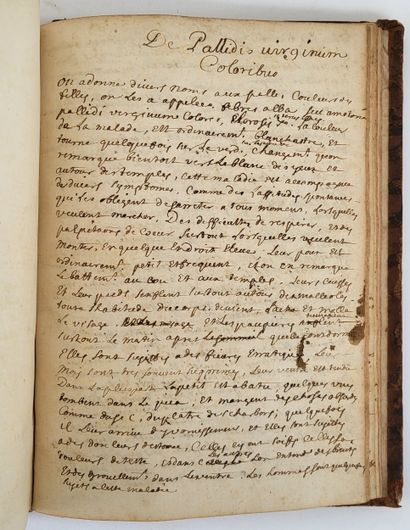
[MEDICAL MANUSCRIPT—18th CENTURY]
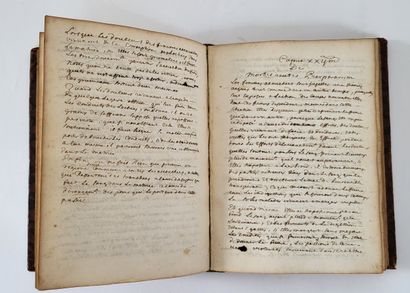
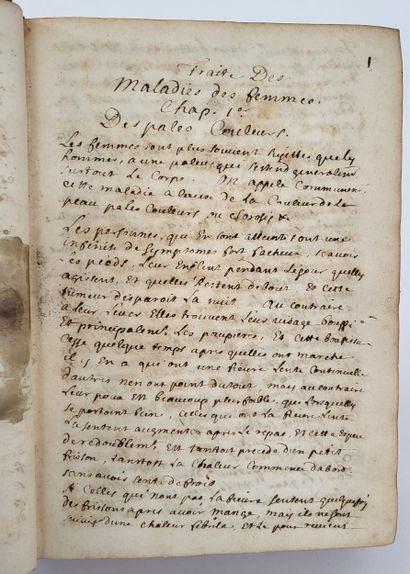
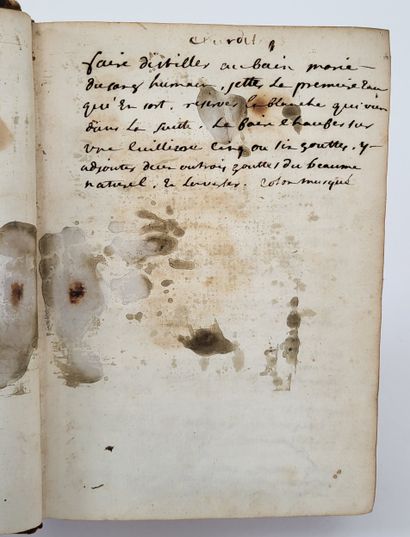
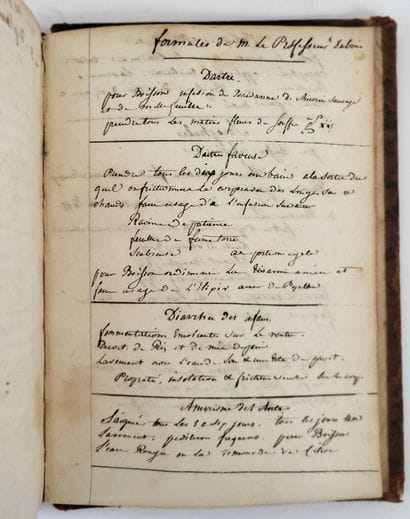
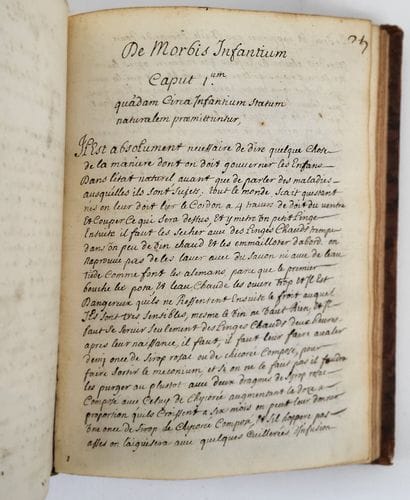
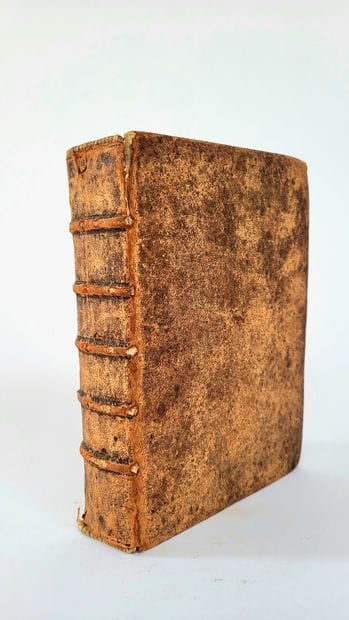
Very small in-4. (3)-130 hand-numbered folios and (210) folios, part of which are left blank at the end. Modest, unmarked contemporary fawn sheepskin (binding rubbed, a few scuffs and wear but structurally sound; various stains, particularly on the first leaves; a few foxing spots).
MEDICAL MANUSCRIPT by the famous GUILLOTIN, father of the guillotine.
Joseph-Ignace GUILLOTIN.
(probably in Reims), 1764.
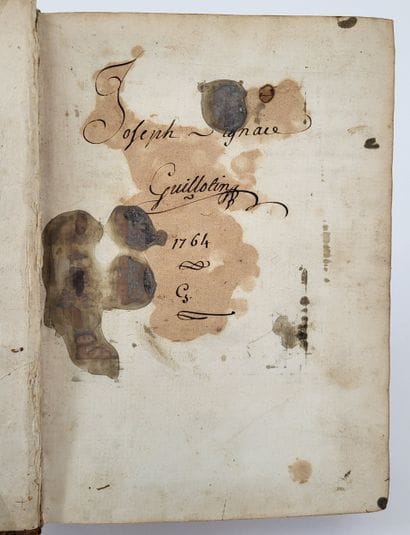
A medical manuscript by Joseph-Ignace Guillotin, featuring his handwritten bookplate dated 1764 at the beginning of the volume.
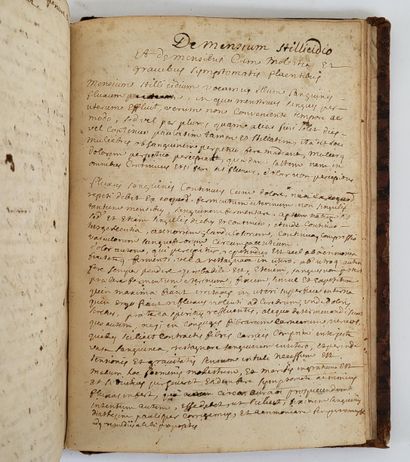
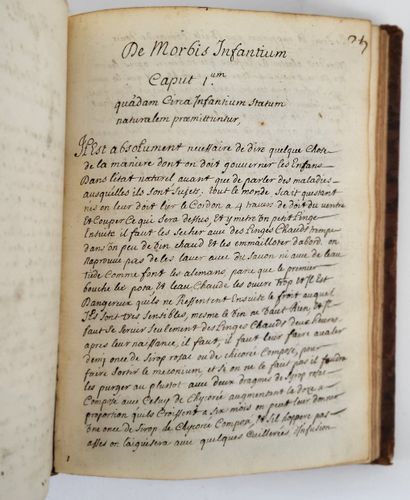
A composite work bound at a later date, it consists of several medical manuscripts, Latin copies, or medical essays. Indeed, multiple handwriting styles are evident. It seems quite plausible that a sort of mutual aid system allowed impoverished students to access the contents of these works. Indeed, Guillotin was able to complete his medical studies thanks to scholarships.
This manuscript consists primarily of writings on women’s diseases.
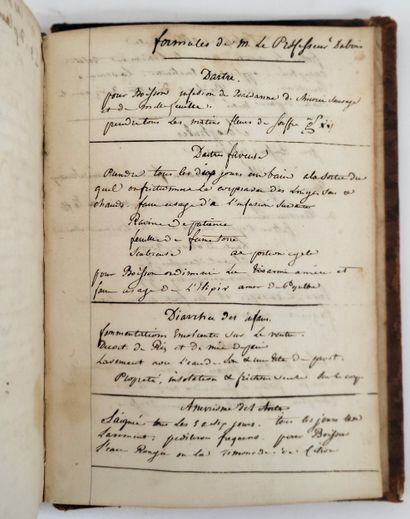
Its final handwritten pages have been expanded to include various recipes and remedies.
In 1763, Guillotin chose to study medicine, first in Reims, where tuition was less expensive, and then in 1768 in Paris, thanks to scholarships. A physician and revolutionary, he was one of the drafters of the Paris “Cahier de doléances” and a deputy to the National Constituent Assembly; he is remembered as the famous, ill-fated inventor of the guillotine, even though, as a physician and politician, Joseph-Ignace was
A voluminous, personal, and intellectually coherent medical manuscript from his youth, bearing the mark of his direct involvement, this work serves as a small historical record.
Very few of Guillotin’s archives or manuscripts have survived; there is no truly significant collection of manuscripts comparable to those of other revolutionary figures. Generally, only a few documents related to his activity as a deputy in the Estates-General can be found, and small collections—lacking depth or specific content—are held in public archives (in France, New York, and Philadelphia).
CAPITAL PUNISHMENT. DEATH SENTENCE.
My orders
Sale information
Sales conditions
Return to catalogue